DCE 9000 Is Moving Fast Because the Industry Can’t Wait

Artificial intelligence (AI), cloud computing, and other compute-intensive workloads are imposing new demands on rapidly expanding data center infrastructure. Increasing power densities and more complex cooling architectures leave less tolerance for failure.
Many existing standards address facility design or quality management for information and communications technology. However, none provides a lifecycle quality framework for suppliers of the power, cooling, and mechanical infrastructure used in data centers.
DCE 9000 is the first quality management system standard developed specifically to address this gap. It establishes a framework for organizations that design, manufacture, build, integrate, install, commission, operate, maintain, or support data center physical infrastructure. Its goal is to improve quality, reliability, supplier performance, and lifecycle consistency. DCE 9000 uses an accelerated development process that combines technical expertise with consensus-based review, shortening the path from industry need to implementation without lowering the bar for quality. Rather than adding another layer of process, the standard provides a common framework that helps organizations move faster with greater confidence as technologies and quality risks evolve.
Standards Can Accelerate Growth, Not Slow It Down
Speed to revenue is a central concern in data center development. Facing tight deadlines, many organizations are wary of new requirements that could add time to a build. A quality standard must demonstrate that improved consistency supports faster, more predictable deployment.
On large, time-sensitive projects, solving similar quality problems separately wastes time and resources. DCE 9000 establishes a common framework with clear and auditable requirements for infrastructure suppliers, reducing repetitive work and reliance on customer-specific qualification processes.
In practice, standardization is not simply a compliance exercise. It delivers operational and financial benefits, with common audit criteria shortening supplier qualification. Building quality into design and manufacturing limits rework, failures, and commissioning delays, minimizing schedule risk and enabling earlier revenue generation.
Why DCE 9000 Moves Faster Than a Typical Standards Cycle
DCE 9000 follows TIA QuEST Forum's formal, consensus-based development process. It builds on ISO 9001 and uses the ISO Harmonized Structure to organize the standard.
TIA QuEST Forum launched the DCE 9000 Working Group in January 2026. The group is now preparing a unified draft for member review and comment by the end of September, nine months after launch. Release 1.0 is scheduled for Q1 2027, putting the initial development cycle at approximately 12 to 15 months from launch to publication. In comparison, many standards take three to five years to develop. For example, the current ISO 9001 revision began in July 2023 and is expected in September 2026, representing a roughly 38-month process for an incremental update to a mature standard.
DCE 9000 achieves this accelerated pace by applying agile methodologies, including parallel drafting and continuous feedback, with support from AI tools. Four technical teams drafted distinct elements of the standard, while experienced standards-development coaches helped translate industry expertise into clear, practical, and auditable requirements. In parallel, the Measurements Sub-Team proposed initial performance and operational metrics. The Code of Practice Sub-Team is defining the certification scheme and auditor competencies, while the Training Sub-Team is developing courses for executives and professionals who will implement or audit the standard.
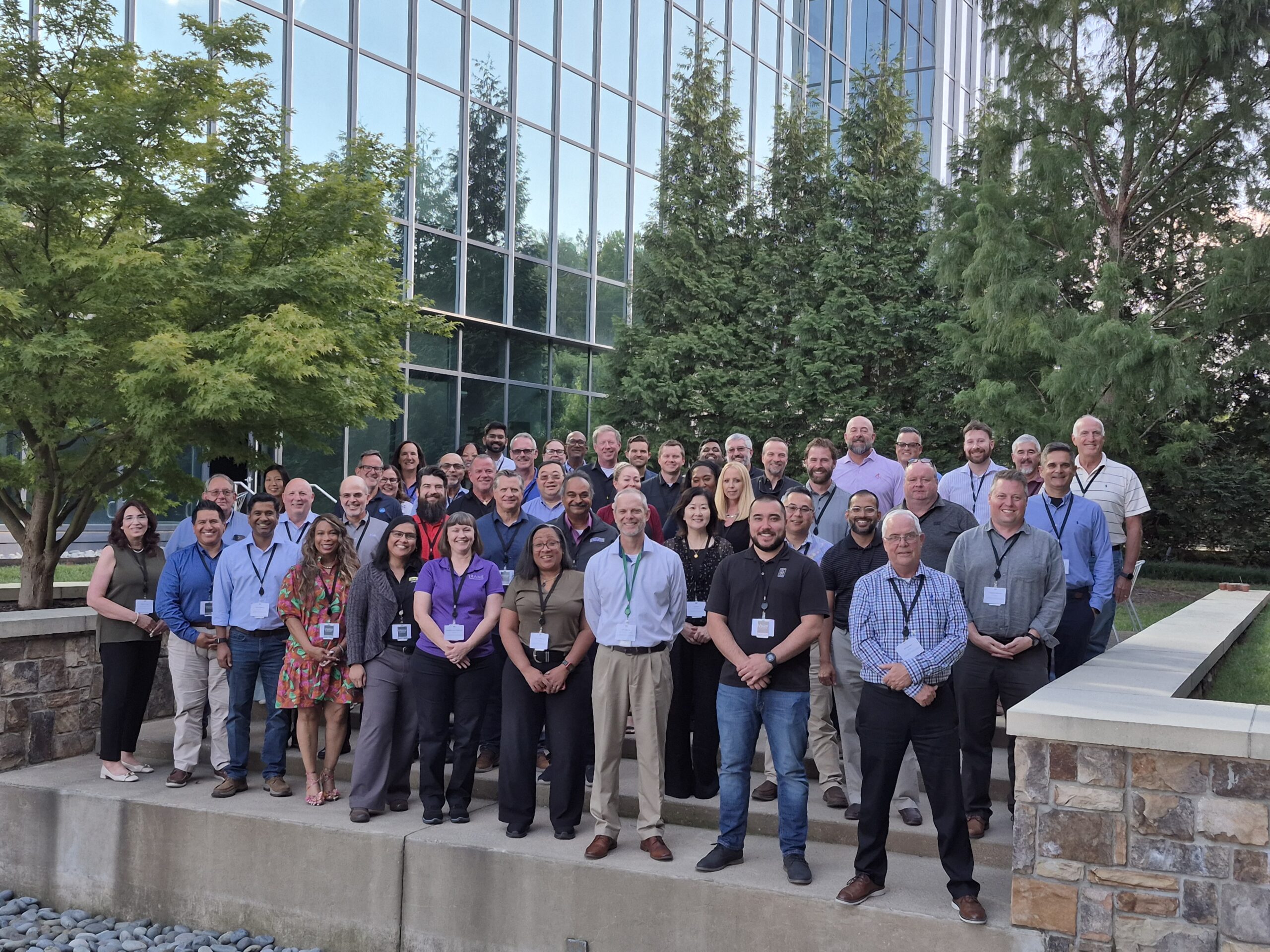
The leadership team has now compiled the first unified DCE 9000 draft, integrating the outputs from all four technical sub-teams. On September 16th and 17th, the DCE 9000 Data Center Excellence Workgroup convened in Nashville to review the draft and advance an industry-led quality management standard built specifically for data center physical infrastructure. Following this review, the document will continue through refinement before entering a formal comment cycle open to eligible TIA QuEST Forum organizations and their assigned volunteers.
Industry Participation Grounds the Standard in Practice
With more than 70 organizations actively participating, the DCE 9000 Working Group has grown into a broad industry collaboration that includes leading operators and suppliers such as Google, Amazon Web Services, Oracle, QTS, Schneider Electric, and Johnson Controls.
Under TIA QuEST Forum procedures, participating organizations have an equal voice in developing the standard. Members contribute operational experience and evaluate requirements for practicality and auditability, while gaining early insight into implementation, certification, and training.
Participation provides direct input and early visibility, and recent survey results indicate broad support for the initiative. Nine out of 10 respondents said the Working Group is addressing the industry's most critical pain points and failure modes. More than seven out of 10 rated their DCE 9000 membership as very or extremely valuable.
The Standard Will Evolve. Help Define What Comes Next.
Release 1.0 will establish DCE 9000's initial requirements. Future revisions will incorporate lessons from implementation and certification as technologies, processes, and quality risks evolve.
Organizations involved in DCE 9000 contribute directly by developing requirements and testing their practicality against real-world conditions. Current participants provide institutional knowledge of earlier decisions, and new members bring experience from additional technologies, regions, and market segments.
TIA expects DCE 9000 to remain in use for decades. Industry needs, rather than a fixed revision schedule, will determine the timing and scope of updates.
A new TIA QuEST Forum white paper will soon explore how agile methodologies, collaborative drafting, and AI tools can accelerate the path from industry need to a practical, consensus-based standard without compromising rigor or technical integrity. DCE 9000 demonstrates that approach now, but Release 1.0 is only the beginning. Continued industry engagement is essential to ensure the standard evolves with new technologies, quality risks, and market needs.
Join TIA QuEST Forum and help shape the standard the data center industry will rely on. Contact the TIA Membership Team at membership@tiaonline.org to get involved.